
The last thing that cannot be copied
AI can now simulate almost everything a person delivers at work. Who you are is the part with no substitute, which makes knowing it precisely the most practical thing you can do about your career.
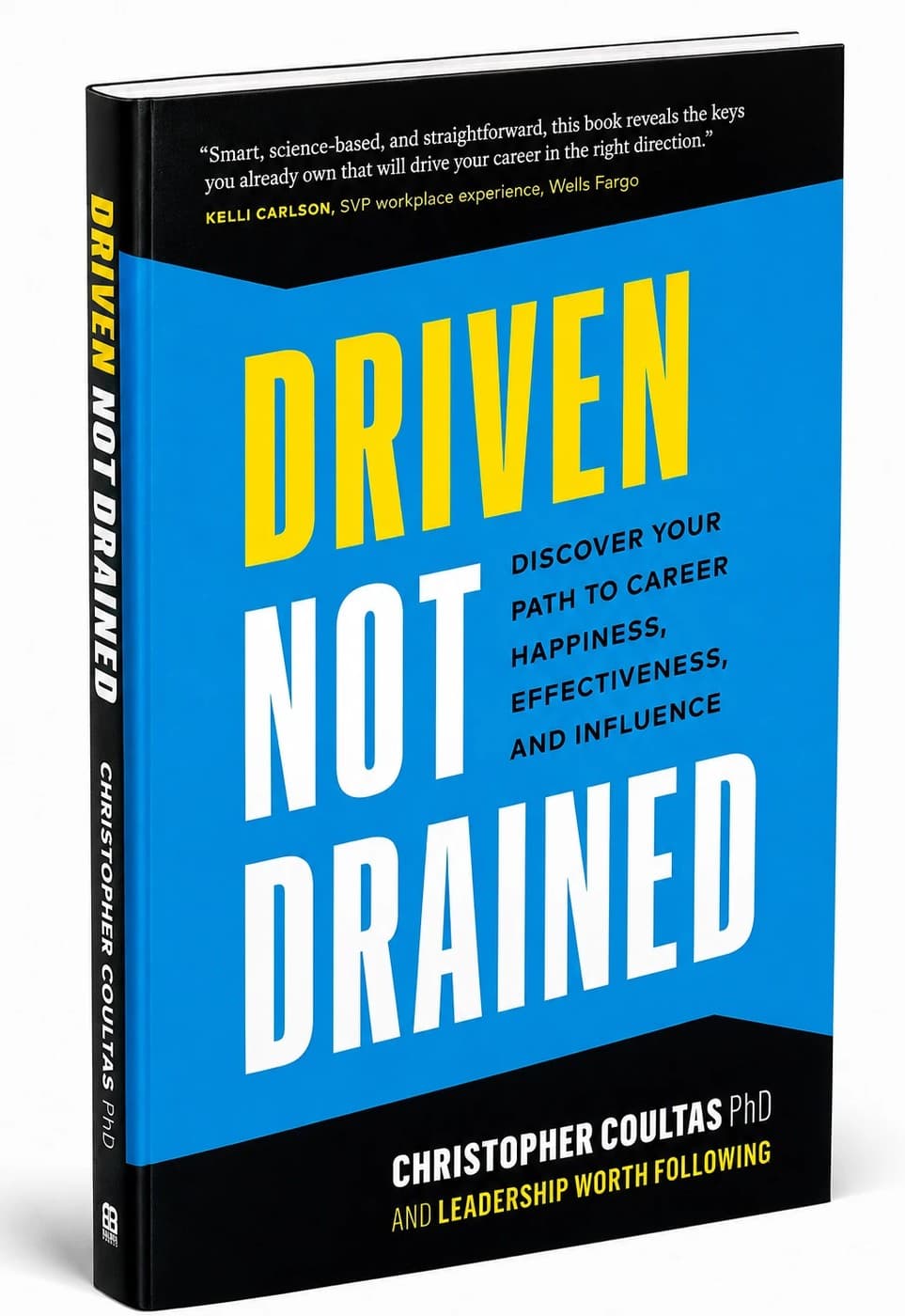
Smart, science-based, and straightforward, this book reveals the keys you already own that will drive your career in the right direction.
What it argues
Being yourself is a performance strategy, and it only works if you are accurate about who that is.
Almost everything a knowledge worker produces can now be simulated. What cannot is the particular person doing it: what they are drawn to, what exhausts them, where their judgment is sound and where it reliably is not. That is the part with no substitute, and almost nobody has measured it.
Which would matter less if people were good at working it out on their own. They are not. Affective forecasting, the business of predicting how you will feel about something later, is one of the things human beings are reliably worst at, so people take roles that disappoint them in ways that were visible in advance. And we see ourselves differently from how everyone around us sees us, so the gap goes unexamined for whole careers.
The book closes both gaps: what drives you, what drains you, what each is good for, and where each turns into a risk. Every driver that makes somebody excellent in one situation makes them predictable in another, and the useful question is always which situation you are in. Authenticity deployed without reading the room is just a habit you have decided to defend.
The instrument underneath it
Every chapter of the book comes off a measure. Twenty-eight drivers across six factors: Impact, Insight, Connection, Harmony, Focus and Meaning.
Chris built the DRiV as VP of Product Innovation at Leadership Worth Following, took it from concept through validation, and has certified more than eighty practitioners on it. It draws on fifty years of research into motives, values, implicit leadership theory, moral identity and goal orientation.
Two things make it behave differently from most profiling tools. It measures what drains a person as well as what drives them, and a very low score is as diagnostic as a very high one, because people rarely notice the areas they are not attending to. And there is no good profile. Every pattern has a situation it suits and a situation it does not, so the report describes both rather than handing somebody a label to enjoy.
Construct validity is documented against the Big Five, CPI 260, conflict styles, decision-making styles, implicit leadership theories, leadership levels, personal values and vocational interests, with a technical manual for each.
An individual report
Eighteen pages on one leader. Every driver scored, what each is good for, and the situation where it turns into a liability.
Download the PDF
A 360
The same drivers rated by the people around them, self against leader, peers and direct reports. The gaps are the interesting part.
Download the PDF
A team report
Every profile in one team laid over each other: what the group drives toward together, and what nobody in the room is paying attention to.
Download the PDF
Twenty minutes, and you get your own report rather than somebody else’s.
Bringing it into an organization
Most organizations already run something like this once a year. The question is whether the thing they run tells anybody something they can act on.
Certification qualifies your own practitioners to run it, which is how an instrument survives past the engagement that introduced it. More than eighty people have been certified on this one.
A team session puts every profile in the room at once, including the places two people are going to grind against each other, with the data in before anybody sits down.
A development program runs the assessment at the front, workshops and coaching around it, and the drivers as the common language for the rest. Chris has built and run this at six-month length.
Copies for a leadership team
Ask about bulk copies, certification, or having the argument delivered in a room rather than read.